Why Dubai's Secondary Markets Are Outpacing Prime Locations in 2025
6 min read
The Narrative Shift No One Expected
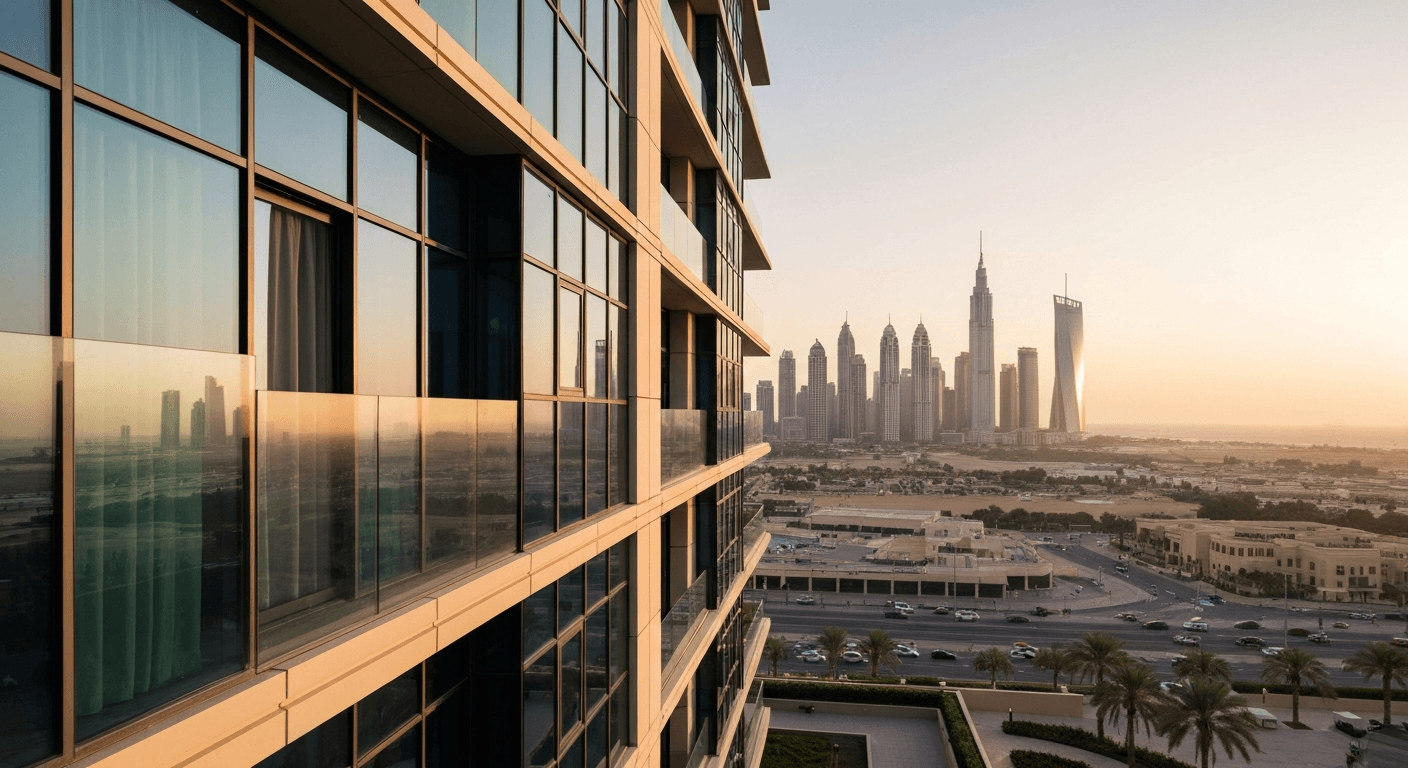
For years, Dubai's real estate conversation has centered on iconic addresses: Downtown Dubai, the Palm Jumeirah, Dubai Marina. These remain aspirational and liquid, but an unmistakable trend is reshaping where serious capital is flowing in 2025.
Secondary markets—established communities like Arabian Ranches, Jumeirah Golf Estates, Dubai Hills Estate, and Mira—are now attracting institutional and high-net-worth investors at rates that rival, and in some metrics exceed, traditional prime locations. The shift isn't random. It reflects a maturation of Dubai's market and a recalibration of what "value" means to different investor cohorts.
The Yield Reality
Rental yields in secondary villa and townhouse communities are running between 4.5% and 6.5% gross annually, depending on unit type and exact location. Downtown Dubai apartments, by contrast, typically yield 3% to 4.5%. Marina properties cluster around 3.5% to 4.8%.
The gap matters. For a AED 2 million investment, that 1.5% to 2% yield differential translates to AED 30,000 to AED 40,000 in additional annual rental income—without taking on materially higher risk. Over a decade, that compounds meaningfully.
Secondary markets reward patient, income-focused investors; prime locations reward liquidity seekers and end-users.
Why Secondary Communities Are Winning
Supply-Demand Mismatch
Prime locations have experienced heavy off-plan delivery over the past 18 months. Downtown Dubai, Dubai Marina, and Jumeirah Beach Residence now carry higher vacancy rates than secondary communities. Secondary markets, by contrast, have absorbed new supply more gradually and have seen stronger tenant demand from young families and mid-career professionals seeking space and community amenities at reasonable prices.
Capital Efficiency
Secondary villa communities offer larger built-up areas and land plots at entry prices 20% to 40% lower than equivalent prime-location properties. A 3-bedroom villa in Arabian Ranches or Jumeirah Golf Estates commands AED 1.8 million to AED 2.5 million; a comparable unit in the Palm or Emirates Hills runs AED 2.8 million to AED 4 million. For investors with finite capital, secondary markets stretch purchasing power significantly.
Tenant Quality and Stability
Secondary communities attract stable, long-term tenants: expat families, corporate relocations, professionals with established employment in Dubai. Turnover is lower, vacancy periods shorter, and maintenance disputes less frequent than in high-turnover, transient prime locations. From a property management perspective, secondary markets are operationally superior.
Regulatory Clarity
Secondary villa and townhouse communities operate under mature strata title frameworks and well-established community management structures. Residents understand rules, governance is predictable, and dispute resolution is streamlined. This contrasts with some prime apartment developments where ownership structures remain complex or community governance is still evolving.
The Capital Appreciation Question
One caveat: secondary markets historically appreciate more slowly than prime locations during strong market upswings. However, 2025 data suggests this gap is narrowing.
- Arabian Ranches and Jumeirah Golf Estates have seen year-on-year price growth in the 4% to 6% range, comparable to Marina and Downtown growth rates.
- Mira and Dubai Hills Estate are tracking at 3% to 5% annually, slightly behind prime but ahead of earlier forecasts.
The leveling reflects two dynamics: (1) prime locations have already appreciated substantially, leaving less room for explosive gains, and (2) secondary communities are benefiting from infrastructure maturation, school openings, and improved connectivity.
Who Benefits Most
Income-Focused Investors
If your goal is steady, predictable rental income with moderate capital growth, secondary markets are now the more rational choice. The yield premium alone justifies the allocation.
Portfolio Builders
Investors constructing diversified real estate portfolios often allocate 60% to secondary markets and 40% to prime. This maximizes yield while maintaining exposure to liquid, aspirational assets.
First-Time Buyers
New investors with AED 1.5 million to AED 2.5 million often achieve better risk-adjusted returns starting in secondary communities, building equity and operational experience before moving into prime or niche assets.
Golden Visa Investors
Under Golden Visa rules, a minimum investment of AED 750,000 in real estate qualifies applicants. Secondary market properties—townhouses, smaller villas—often meet this threshold while leaving capital for diversification. Prime locations, by contrast, consume larger sums for a single unit.
The Liquidity Trade-Off
One legitimate concern: secondary markets are less liquid than prime. A Downtown Dubai apartment can sell within weeks; a secondary villa may take 4–8 weeks or longer, depending on price and condition.
For income investors planning to hold 5+ years, this is immaterial. For traders or those anticipating a 2–3 year exit, prime locations remain superior.
What the Data Tells Us
Dubai Land Department (DLD) transaction volumes and price indices show secondary communities now account for approximately 45%–50% of residential transactions by volume, up from 35%–40% in 2022. Average transaction sizes in secondary markets have also increased, indicating that higher-value investors are entering these segments.
RERA rental dispute data suggests secondary communities generate fewer complaints per unit, correlating with better tenant satisfaction and lower operational friction.
The 2025 Outlook
Expect secondary markets to continue attracting capital as:
- Prime locations mature and yields compress further.
- Institutional real estate funds expand Dubai exposure and favor yield-accretive assets.
- Golden Visa demand sustains, driving mid-market property allocation.
- Expat family demographics grow, increasing demand for villas and townhouses.
Prime locations will remain relevant—for liquidity, prestige, and end-user appeal. But the notion that secondary markets are "second-best" is now empirically outdated.
A Practical Framework
When evaluating a secondary market investment, focus on:
1. Community maturity: Established governance, mature infrastructure, proven tenant demand. 2. Yield spread: Ensure rental returns exceed prime alternatives by at least 1.5%–2%. 3. Exit timeline: If you may need to sell within 3 years, reconsider; if 5+ years, secondary markets make strong sense. 4. Developer and management: Confirm the community is professionally managed and dispute resolution is transparent.
How Idigov Group Helps
At Idigov Group, we counsel investors on portfolio construction across both prime and secondary segments. We help clients align property selection with income goals, tax residency status, and exit timelines. Whether you're a first-time buyer exploring secondary markets or an experienced investor rebalancing toward yield, our RERA-certified advisors provide data-driven guidance tailored to your profile and risk tolerance. We also manage property documentation and compliance, ensuring your investment is structured correctly from acquisition through tenancy management.
Press Contacts
About Idigov Group
Idigov Group is a Dubai-based real estate consultancy and operating group offering end-to-end services across investment advisory, brokerage, property management, conveyancing, and corporate setup. Founded by Akhmed Idigov, the group helps international investors and operators navigate the UAE property market with institutional-grade rigor and full operational support.