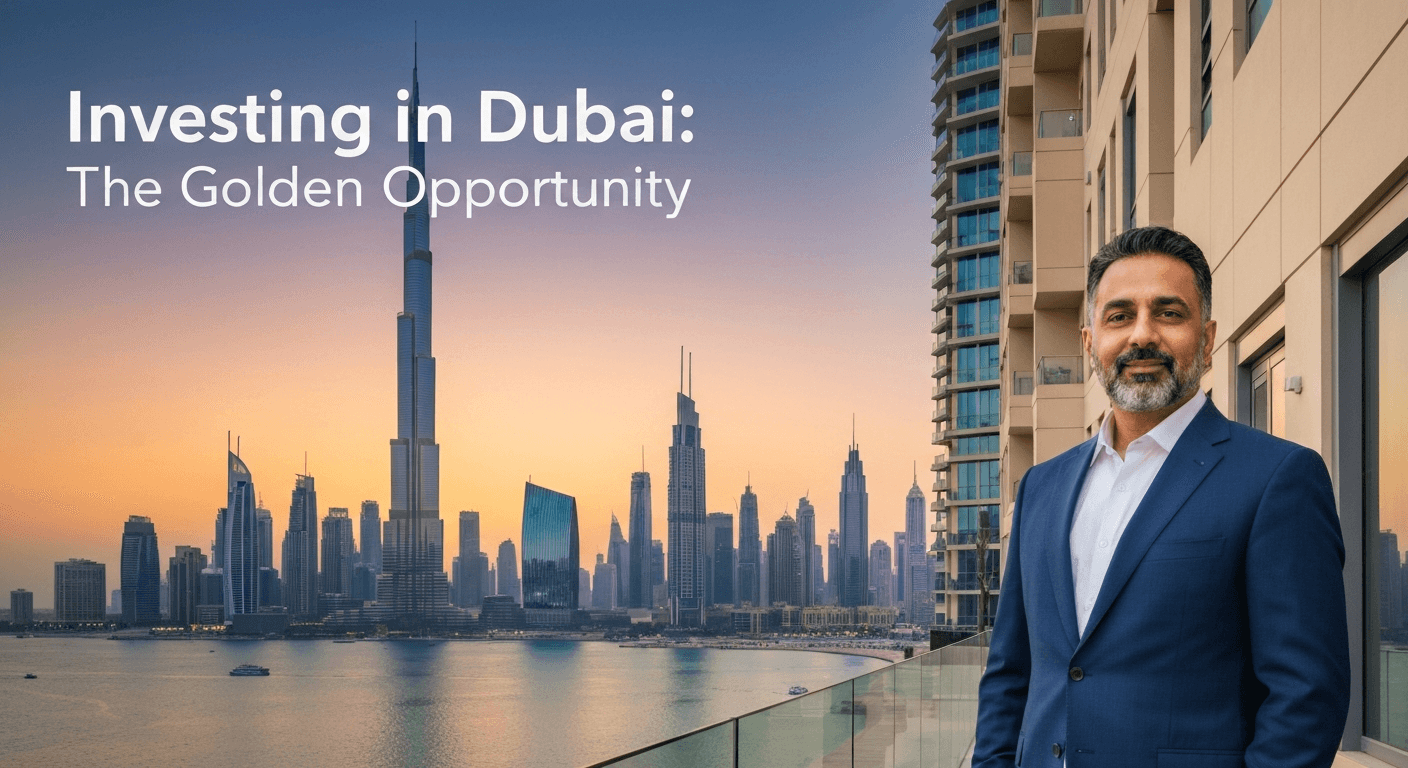
The Leasehold Trap: Why Dubai Investors Overlook Expiry Dates
6 min read
The Hidden Risk Nobody Talks About
Dubai's property market attracts investors worldwide, yet one structural risk remains systematically underpriced: leasehold expiry. Unlike freehold properties—which grant perpetual ownership—leasehold properties in Dubai carry a finite lease term, typically 99 years from the date of first registration with the Dubai Land Department (DLD).
Most investors focus on yield, location, and developer reputation. Few ask a simple question: how many years remain on the lease?
This oversight costs money. A property with 40 years left on its lease commands a materially lower price than an identical unit with 80 years remaining. Yet many buyers discover this only after purchase—when refinancing, selling, or applying for a Golden Visa.
Why Lease Length Matters More Than You Think
Banks Won't Lend on Short Leases
Most mortgage lenders in the UAE—including First Abu Dhabi Bank, Emirates NBD, and Mashreq—will not finance properties with fewer than 50 years remaining on the lease. Some require 60 years or more. This is not a guideline; it is a hard rule enforced by the Central Bank of the UAE.
If you buy a property with 45 years left on the lease and later need to refinance—perhaps to unlock equity for a second purchase or to consolidate debt—you will be refused.
Resale Value Declines Sharply
As a lease approaches expiry, its market value erodes non-linearly. A property with 30 years remaining is worth significantly less than one with 50 years, even in the same building. This is not speculation; it reflects fundamental finance: the shorter the remaining lease, the shorter the investment horizon, and the fewer future buyers qualify for financing.
A property with 20 years left on its lease is effectively unsellable to institutional buyers, mortgage-dependent owner-occupiers, or serious investors. You are left with cash buyers seeking a short-term hold—a materially smaller buyer pool.
Golden Visa Eligibility Becomes Murky
The UAE's Golden Visa program requires property investment of at least AED 500,000 in most emirates. Dubai's General Directorate of Residency and Foreigners Affairs (GDRFA) has not published explicit rules on minimum remaining lease length for visa eligibility. However, lenders and conveyancers report increasing scrutiny of properties with fewer than 50 years remaining, and some visa applications have been delayed or rejected based on lease expiry concerns.
If you plan to use property investment as a visa pathway, a short lease introduces legal and administrative risk.
How to Check Lease Expiry: A Practical Guide
Step 1: Obtain the Title Deed
Every property registered with the DLD has a title deed (also called a Fard) that records the lease commencement date and lease term. You can request this from the seller's conveyancer or from the DLD directly if you have the property reference number.
The title deed is the only authoritative source. Do not rely on agent marketing materials or developer brochures.
Step 2: Calculate Remaining Lease
The lease term is counted from the date of first registration, not from the date you purchase. If a property was first registered on 1 January 2000 with a 99-year lease, it expires on 1 January 2099—regardless of when you buy it.
This is critical: if you purchase in 2025, you inherit the original lease term. You do not get a "fresh" 99 years.
Step 3: Verify with Your Conveyancer
Before making an offer, instruct a RERA-certified conveyancer (or your real-estate advisor) to confirm the exact expiry date in writing. This takes 2–3 business days and costs AED 500–1,000. It is non-negotiable due diligence.
The Communities Most Affected
Leasehold properties dominate Dubai's older, established communities:
- Downtown Dubai (mostly 99-year leases from 2004–2008 onwards)
- Dubai Marina (similar vintage)
- Business Bay (2006–2010 registrations)
- Jumeirah Lake Towers (2003–2008)
Properties in these areas registered before 2010 are now approaching or entering the 50–70 year remaining-lease zone. A 99-year lease registered in 2005 has only 79 years left as of 2025.
Newer communities—Arabian Ranches, Emaar South, Damac Hills, Dubai South—generally feature longer remaining leases, as they were developed and registered more recently.
Lease Renewal: The Unresolved Question
Theoretically, leaseholders can apply to renew their lease before expiry. In practice, lease renewal in Dubai remains legally unclear. The DLD has not published a standardized renewal process, and no major renewal has been completed and publicized.
Some conveyancers suggest that renewal is possible but requires negotiation with the landlord (often the original developer or a government entity). Others warn that renewal may not be available at all, or may be prohibitively expensive.
Do not bank on renewal. Treat the remaining lease length as a fixed countdown.
What to Do If You Already Own a Short-Lease Property
If you purchased before understanding lease expiry, you have options:
- Monitor the market. If you have 50+ years remaining, you likely have 5–10 years before resale becomes difficult. Plan an exit strategy now.
- Refinance early. If you have a mortgage, refinance while your lease qualifies (typically 50+ years remaining). Lock in a long-term rate before lenders tighten criteria.
- Consult your conveyancer. Ask explicitly about renewal options and timelines. Document their response.
- Hold for cash flow. If the property generates strong rental yield, holding for income (rather than resale) reduces lease-expiry risk. You are not dependent on a buyer.
The Investor's Takeaway
Remaining lease length is as important as location, price, and yield. A bargain property with 30 years left on the lease is not a bargain—it is a liability with a countdown timer.
When evaluating any property in Dubai, make lease verification your second step, after price. If a seller or agent resists providing the title deed or remaining lease information, walk away. Transparency on lease terms is non-negotiable.
Dubai's property market offers genuine opportunities, but only for investors who understand the full structural picture. Lease expiry is that picture's most overlooked frame.
How Idigov Group Helps
At Idigov Group, our conveyancing and advisory services include a full lease-term audit for every property we evaluate. We verify remaining lease length, explain lender and visa implications, and model long-term resale scenarios. Whether you are a first-time buyer or a seasoned investor, we ensure lease risk is identified and factored into your investment thesis before you commit capital.
Press Contacts
About Idigov Group
Idigov Group is a Dubai-based real estate consultancy and operating group offering end-to-end services across investment advisory, brokerage, property management, conveyancing, and corporate setup. Founded by Akhmed Idigov, the group helps international investors and operators navigate the UAE property market with institutional-grade rigor and full operational support.